

The feasibility study for data-center retrofits.
From facility data to a decision-ready screening memo, framed for the reader, in days, not months.
The self-serve screen is anonymous: enter the facility basics and the verdict renders on the spot. No email unless you want the evidence behind it.
Cumulative cash flow, discounted at 10%. The curve bends as later years count for less, and crosses zero at about 7.8 years.
The retrofit-evaluation bottleneck
Legacy data centers hold valuable assets like metro locations, secured power allocations, and fiber. But serving modern AI density is not automatic, and finding out is slow and expensive.
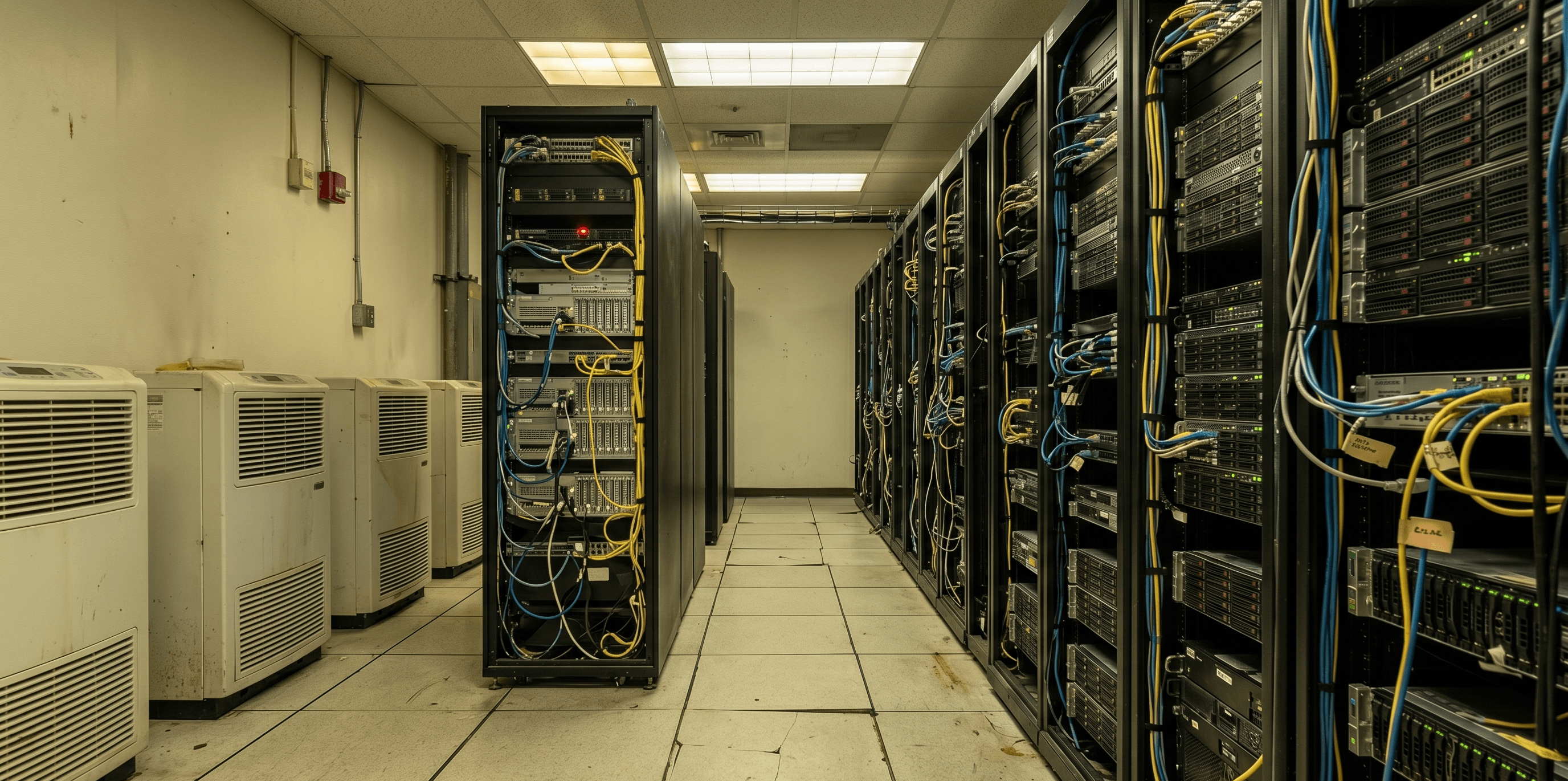
Every facility hits a limiting factor first (sometimes power, sometimes cooling, sometimes usable capacity), and which one varies by site. Evaluating whether a facility clears it and pencils as a retrofit takes weeks of expensive consultant work, and many turn out non-viable. There is no standardized screening framework, so capital sits idle while deals die in diligence.
Screen retrofits before you commit capital
A standardized engine takes your facility data and returns a verdict, full economics, and a sourced memo, in the language of the reader.
Upload your facility data
Fill a simple template with the building's key parameters: power, cooling, size, age. Minutes, not meetings.
Get screening results in minutes
The engine matches your facility to retrofit archetypes and returns a verdict (strong, conditional, or negative) with full economics and a sensitivity range that narrows as data fills in.
Generate a decision-ready memo
An AI-narrated screening memo in the language of the reader: CFO budget, investor return, or GC execution readiness. Same numbers, persona-framed, every figure traceable.
How it works
The screening engine behind every RespiraTech report is patent-pending.
It shows its math, and defines its downside
The memo does not hand you a single number to trust. It shows the discounted return on a real time-value curve, then names exactly what the downside looks like. Honesty is the moat.
The discounted curve is the hero: it bends because later years count for less at a 10% rate, crosses zero at the break-even, and the labeled 10-year NPV sits on the curve, not above it.
The same engine, every reader in their own language. CFO budget, investor return, GC execution: the memo reframes emphasis by persona, but the numbers never change, and every figure traces to a calibration source.
Sequenced, not just priced
Every retrofit has an order. The screen lays out the phases and their durations, and shows the long-lead equipment running alongside them.
Built for infrastructure decision-makers
Data-center owners and operators
Build the business case for your facility upgrade: a budget-review memo in the language of your finance team, with the stranded capacity and asset value a retrofit unlocks.
PE developers and infrastructure funds
Screen brownfield acquisitions in days, not months. Know which sites pencil out before committing capital.
GCs and commissioning agents
Bring a client an execution-readiness read: what the retrofit unlocks, the build path and timeline, and the constructibility and safety flags.
One screening, three readers: the owner / CFO, the investor, and the GC. The same numbers, reframed for each.
Built by an operator, not modeled from the outside
These estimates come from someone who spent four years running industrial cooling and heat-transfer systems, not from a software team modeling them at a distance. That operating experience is why the numbers hold up.

For four years, RespiraTech's founder was an operations and projects engineer at Dow Chemical, running the utility systems of a large-scale petrochemical facility (cooling towers, industrial refrigeration, heat exchangers, and power distribution) and leading capital retrofit projects on aging cooling and electrical infrastructure. He operated mission-critical systems through high-stakes events, including the 2021 Texas grid crisis, and evaluated dozens of capital projects a year by return on investment.
That is the lens behind every screening: the same heat-transfer physics, equipment lead times, and capital discipline that govern a real plant, now applied to legacy data centers, with a chemical-engineering and economics degree from the University of Florida and an MBA from Harvard Business School.



Personal credentials and operating background, not customer or partner endorsements.
Common questions
What is a data-center cooling retrofit screening?
A fast feasibility study that tells you whether an older air-cooled data center is worth retrofitting to support higher-density AI loads. It returns the economics (cost, energy savings, NPV, and payback) and an execution outlook, so you can decide before committing to a full engineering study.
How long does it take?
Days, not the weeks or months a traditional first-pass evaluation runs. You enter a facility's specs and get back a decision-ready screening memo.
What does it cost compared to a traditional study?
A traditional first-pass feasibility study typically runs $50K or more. The screening comes first, so you only pay for the deep study on facilities worth pursuing.
Where do the numbers come from?
Every figure traces to a named calibration source (DOE, ASHRAE, the Uptime Institute, eGRID, and LBNL), combined with hands-on industrial operating experience. Outputs are screening-level midpoint estimates with a downside and upside range, not point-estimate forecasts.
Who is it for?
Private-equity and infrastructure investors, CFOs, general contractors, and data-center owners evaluating a legacy air-cooled facility for acquisition or retrofit.
What makes a facility a good retrofit candidate?
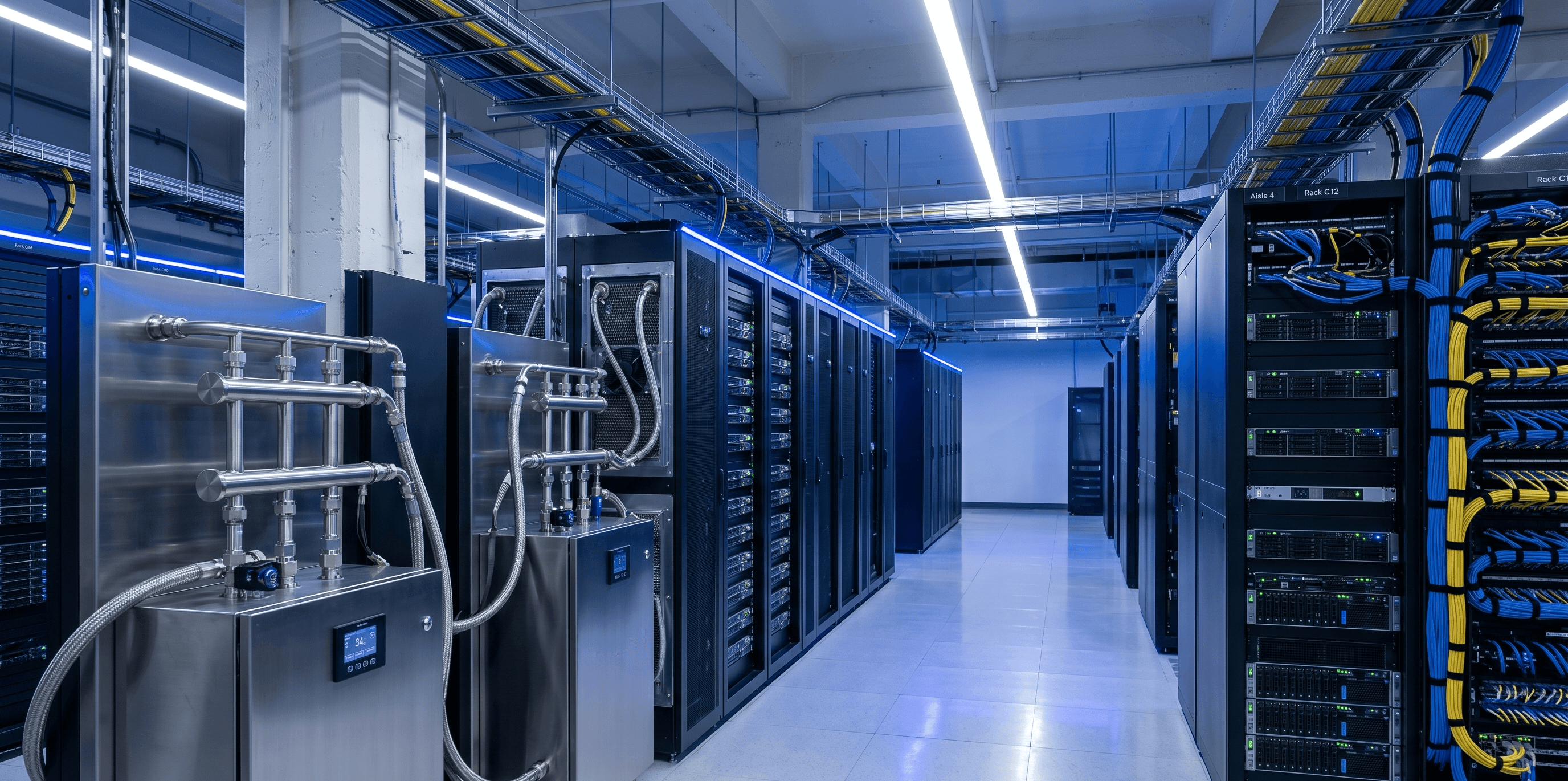
Usually a cooling-limited site: one that runs out of cooling before it runs out of power or floor space, so it pays for capacity it cannot sell. A retrofit (often hybrid rear-door cooling) relieves that constraint and unlocks the stranded capacity.
Ready to screen a facility?
Run the self-serve screen right now, anonymously, or request a full screening and we will follow up by email.
The self-serve screen asks for no email; the verdict renders on the spot. A detailed engagement is a separate, optional step.